Guide to Baton Rouge Historic Home Styles & Architecture
April 2, 2026
April 2, 2026
Love older homes but not sure how to tell a Creole cottage from a bungalow, or a shotgun house from a Colonial Revival? In Baton Rouge, that question matters because the city’s historic housing story is not one style, but a layered mix shaped by different eras of growth. If you are exploring character homes, planning a move, or simply curious about local architecture, this guide will help you understand the styles, neighborhoods, and practical details that make Baton Rouge historic homes so distinctive. Let’s dive in.
Baton Rouge has one of the more varied historic housing landscapes in Louisiana. Rather than being defined by a single look, the city brings together early downtown building traditions, turn-of-the-century cottages, and early-20th-century revival and bungalow homes.
According to the City of Baton Rouge overview of Spanish Town and nearby historic areas, the city’s oldest surviving neighborhoods are concentrated in and near downtown. Spanish Town dates to 1805, Beauregard Town was founded in 1806, and the broader Garden District reflects a cluster of early-20th-century subdivisions with a significant amount of housing from the early 1900s.
That layered history is a big reason these homes continue to draw attention. You are not just looking at older houses. You are seeing how Baton Rouge grew over time, from pre-auto street patterns near downtown to shaded garden-suburb development in the Garden District.
Spanish Town is often the best place to see Baton Rouge’s architectural variety in one area. The city describes it as its oldest neighborhood, and local designation materials highlight homes that span from the 1820s through the 1940s.
In practice, that means you may see everything from rare antebellum survivors to shotgun houses, Folk Victorian cottages, and early bungalows in the same general area. The Spanish Town designation report notes this wide range of building types and styles, which is part of what gives the neighborhood its layered visual character.
Beauregard Town offers a different but equally important piece of the local story. Founded in 1806 with a European-style plan, it is known for its intimate scale and strong collection of historic residential buildings.
The same Spanish Town and historic district materials from Baton Rouge explain that early downtown neighborhoods like Beauregard Town keep narrow streets and development patterns that predate the automobile. Beauregard Town is also described in local historic documentation as one of the finest surviving turn-of-the-century middle-class residential areas in East Baton Rouge Parish, with many intact exterior details.
The Garden District tells the early-20th-century chapter of Baton Rouge architecture especially well. This broader area includes Roseland Terrace, Drehr Place, and Kleinert Terrace, all tied to the city’s growth during that period.
The city notes that the Garden District reads as a shaded garden suburb with live oaks, sidewalks, and alleys, and that Roseland Terrace retained 88% of its pre-1930 housing stock along with nearly 300 bungalow homes. That helps explain why the area feels so visually cohesive and why buyers often associate it with classic Baton Rouge porch culture and bungalow architecture.
Creole cottages reflect one of Louisiana’s oldest architectural traditions. The Louisiana Architecture Handbook on French Creole styles describes these homes as climate-adapted, often raised off the ground, with galleries or porches, timber framing, and either bousillage or masonry infill.
What makes this style especially interesting in Baton Rouge is that it connects the city to broader regional building traditions while still showing up in local inventories. Baton Rouge records include Creole Cottage examples in older neighborhoods, including a pre-1891 example on France Street.
When you see a modest older home with a simple form, practical response to climate, and strong emphasis on porch or gallery space, you may be looking at that Creole influence. These homes are less about ornament and more about livability, ventilation, and adapting to Louisiana conditions.
Shotgun houses are one of the most recognizable historic home types in older Southern cities, and Baton Rouge is no exception. The National Park Service overview of shotgun houses describes them as narrow homes, usually one room wide and two to four rooms deep, often with the gable end facing the street and doors aligned to improve airflow.
Spanish Town specifically includes shotgun houses among its historic building types. If you are touring an older Baton Rouge neighborhood and notice a narrow footprint, a straightforward front porch, and a linear room arrangement, that classic shotgun form may be what you are seeing.
These homes often appeal to buyers who appreciate efficient layouts and vernacular architecture. They also play an important role in the street rhythm of historic neighborhoods because their narrow fronts create a repeating pattern along the block.
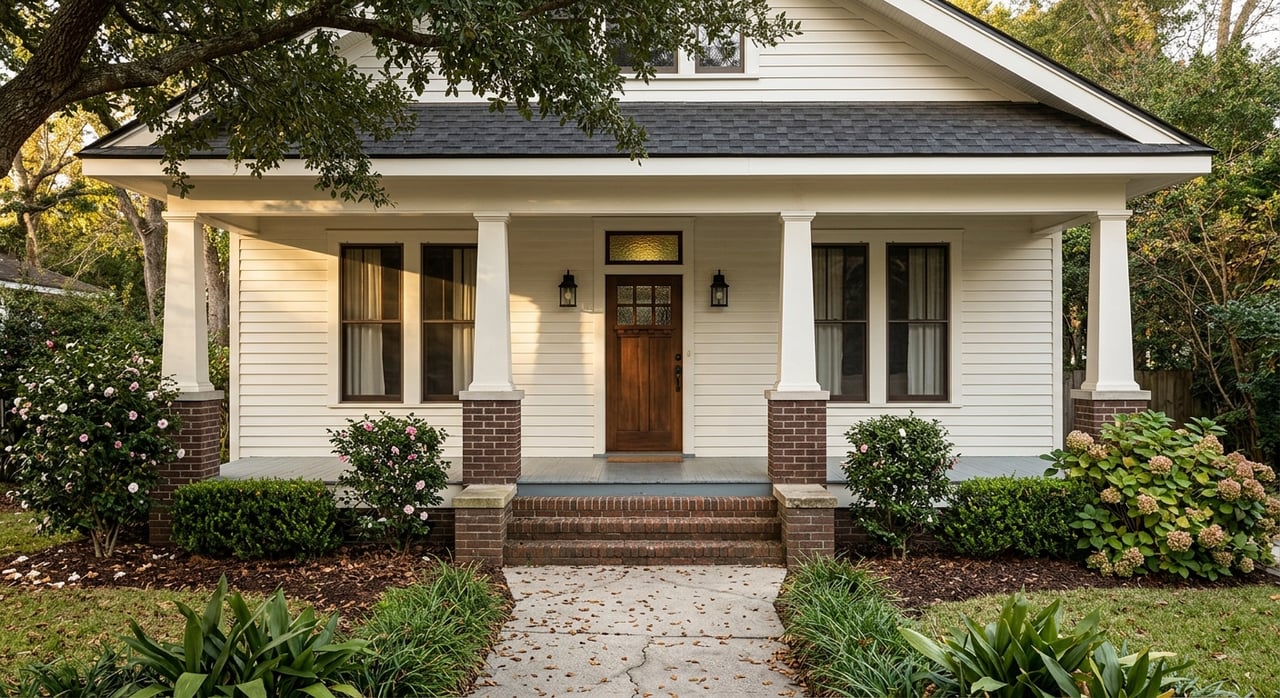
If one style strongly defines early-20th-century historic Baton Rouge, it is the bungalow. Local designation guidance for Drehr Place describes Baton Rouge bungalows as one- to one-and-a-half-story homes with low rooflines, exposed rafters, and porches supported by tapered square posts or pedestals.
Many local examples also include raised brick piers, low-pitch front-gable roofs, and full-width porches. In neighborhoods like Drehr Place, Kleinert Terrace, and Roseland Terrace, these homes are a major part of the visual identity.
For many buyers, bungalows hit a sweet spot. They often offer strong curb appeal, practical room sizes, welcoming porches, and architectural details that feel handcrafted without being overly formal.
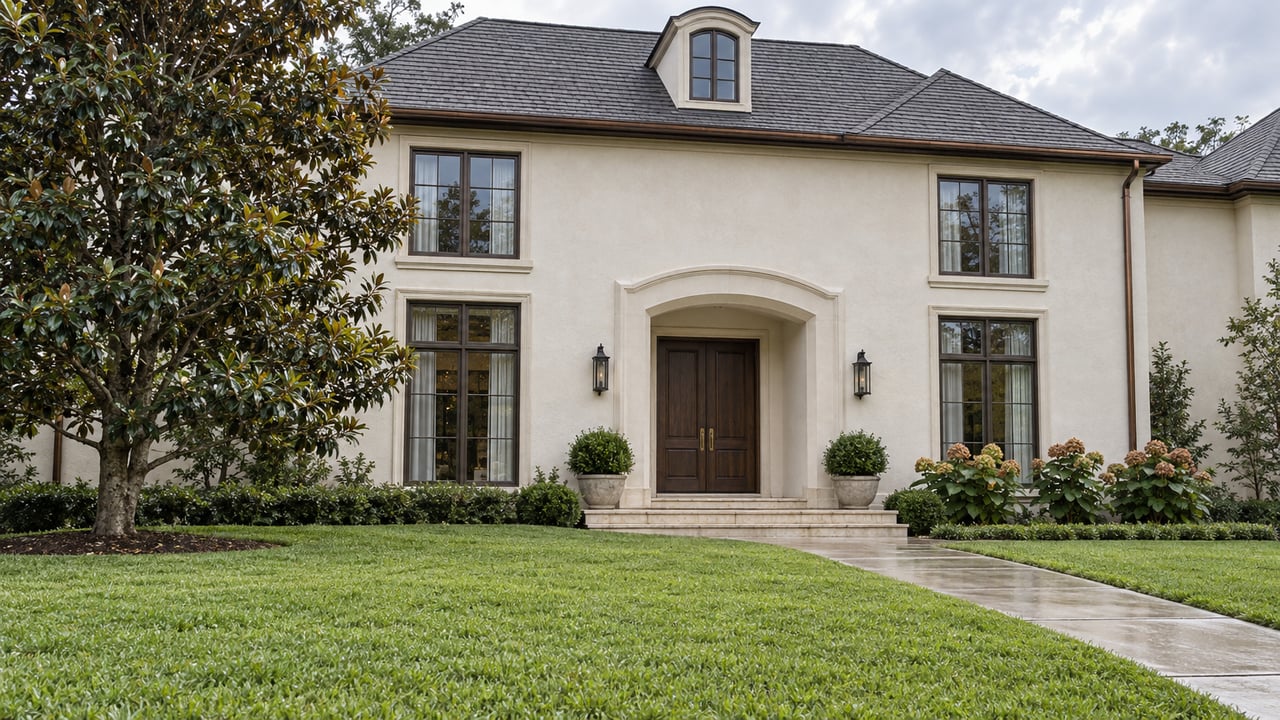
Baton Rouge historic architecture also includes more formal revival styles. The Louisiana guide to Greek Revival architecture highlights familiar features such as symmetry, classical columns, pediments, and formal entry details.
In Baton Rouge, Spanish Town includes Greek Revival examples, while Drehr Place and Kleinert Terrace are especially known for Colonial Revival and Classical Revival homes. These houses often feel more symmetrical and composed than nearby cottages or bungalows.
If you are drawn to pillars, fanlights, balanced facades, and a more formal front porch arrangement, this category may be the one that speaks to you. These homes often carry a strong sense of structure and presence on the street.
Not every historic home fits neatly into one box. In fact, part of Baton Rouge’s charm is how often styles overlap.
The Spanish Town designation report notes Folk Victorian cottages with sawn-work detailing, Stick-style references, Italianate porch details, and later Queen Anne, Craftsman, and Mission-style examples. Beauregard Town is also known for details like turned columns, brackets, barge boards, and balustrades, all of which create a more decorative streetscape.
For you as a buyer, this means two homes built around the same era can feel very different. One may be simple and restrained, while another might feature layered trim, decorative porch work, and more visual texture.
Historic homes in Baton Rouge tend to offer something many newer neighborhoods cannot replicate: a strong sense of place. The appeal often comes from the combination of front porches, mature trees, connected streets, and architecture with visible craftsmanship.
The city’s Community Design and Neighborhoods resources explain that the earliest neighborhoods grew as extensions of downtown within a connected street network. That pattern gives many older areas a more urban and social feel than later suburban development.
The Garden District, for example, is closely tied to live oaks, boulevards, and a long-standing garden-tour culture noted by LSU’s Garden District tour information. In Spanish Town and Beauregard Town, the narrow streets and intimate scale add another kind of charm that many buyers notice right away.
In simple terms, people are often buying more than square footage. They are responding to porch culture, street character, and a neighborhood setting that feels established and visually rich.
Before you buy a historic or character home, confirm whether the property is in a local historic district, a National Register district, or both. That distinction matters if you plan to make changes.
According to Baton Rouge’s Certificate of Appropriateness guidance, local historic districts require review for exterior changes visible from the street. National Register listing alone does not automatically trigger that same local review.
If you want to renovate, preservation best practices are worth understanding early. The National Park Service Standards for Rehabilitation emphasize repairing character-defining features rather than replacing them when possible and making new work compatible in scale, massing, and materials.
That does not mean a home has to stay frozen in time. It means thoughtful updates tend to respect what gives the home its identity in the first place.
Older homes can be rewarding, but they also require practical due diligence. The National Park Service guidance on moisture management in historic houses points to basics like maintaining roofs, gutters, downspouts, masonry, and vegetation to keep water out.
Lead paint is another key concern. EPA guidance referenced in the research notes that renovation work in pre-1978 homes can create dangerous lead dust, so lead-safe practices or certified contractors may be needed.
Some owners may qualify for preservation-related financial support. The Louisiana Restoration Tax Abatement program can apply to owner-occupied private homes and historic buildings, though approval is required and the benefit is not automatic.
If you are considering a historic property, it can be worth reviewing whether the home’s status may open the door to programs like this. That is especially helpful if you expect meaningful restoration work.
If you are serious about buying a historic home in Baton Rouge, a little strategy goes a long way. Here are a few smart first steps:
Historic homes are rarely one-size-fits-all. The right fit for you depends on whether you value original details, renovation potential, walkable surroundings, porch space, or a specific architectural look.
If you are exploring Baton Rouge’s older neighborhoods and want practical guidance on what to look for, the The Natasha Engle Team can help you evaluate character homes with a clear eye for both style and day-to-day livability.
Not only do we provide you resources on finding you your new dream home; We will also sell your home quickly with technology that far surpasses the average agent.